The Gold Mine You're Giving Away for Free
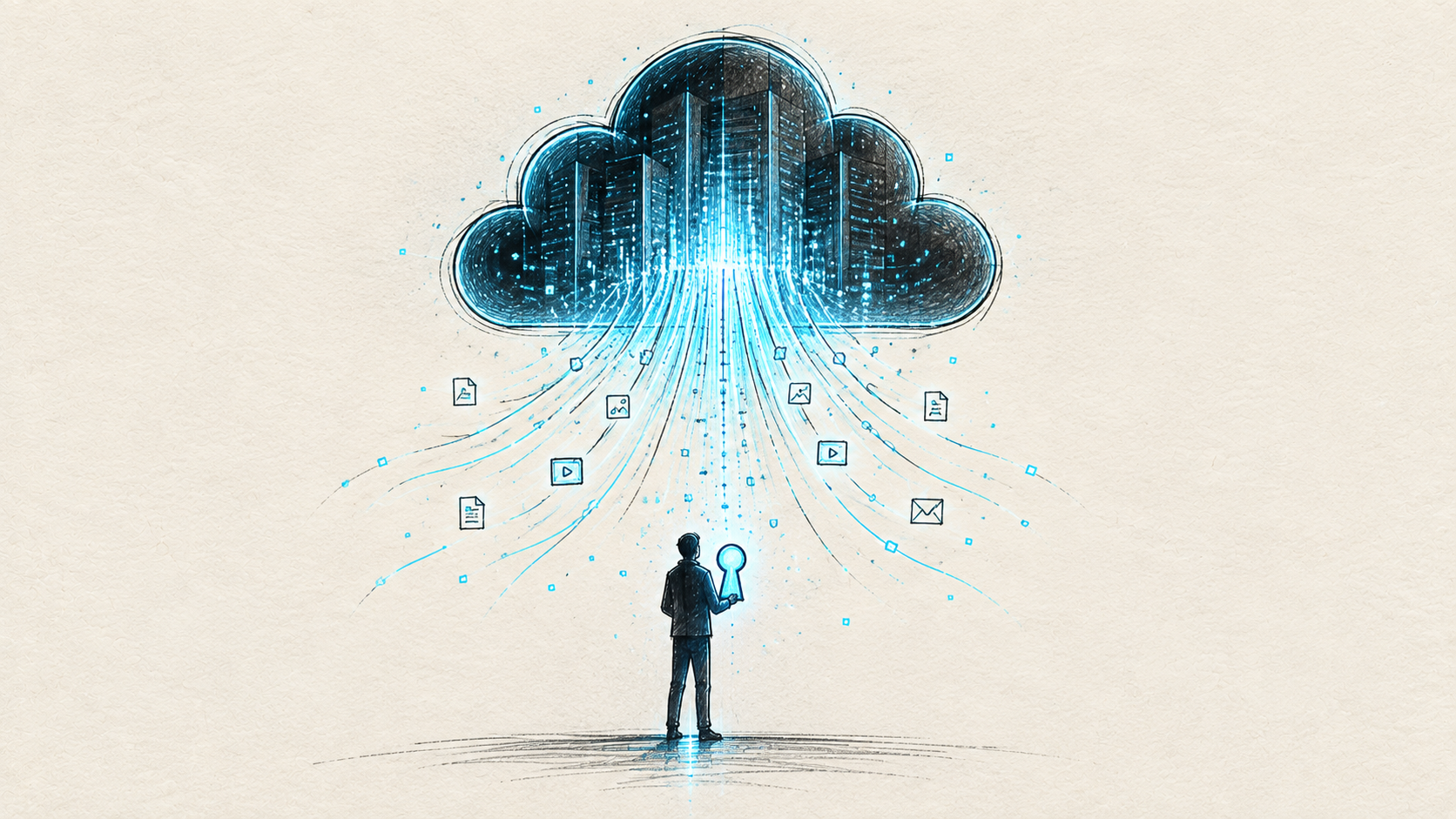
It starts with something ordinary. A morning run. You finish, glance at your watch, and a burst of digital confetti celebrates a new personal record. You open the fitness app, review your heart-rate zones and sleep score, feel a small sense of accomplishment, and close the app. Total time spent thinking about it: about ninety seconds.
In those ninety seconds, something enormous happened — something you will never see. Your watch had been sampling your heart rate every one to two seconds throughout the run, your movement patterns up to a hundred times per second, your GPS position every second you were outdoors. The app you just closed packaged all of it and transmitted it to cloud servers. And from there, it began a journey through an economy you never agreed to in any meaningful sense.
Here is how that journey works. The raw signals are first analyzed and aggregated. Your individual run dissolves into a sea of millions of other runs, and patterns are extracted: where people move, when they move, how they sleep, what their bodies are doing. These patterns are then packaged as products — industry documents call them "de-identified insights" — and licensed to analytics firms, advertisers, corporate wellness programs, and insurers. Your behavior becomes market intelligence. Your patterns become products. Your data becomes revenue. And none of that revenue reaches you.
The word "de-identified" is doing a lot of heavy lifting in that sentence, and it is worth pausing on, because most people assume it means "anonymous and safe." The research says otherwise. In a landmark 2000 study, computer scientist Latanya Sweeney demonstrated that 87% of Americans could be uniquely identified using just three data points: ZIP code, date of birth, and sex. More recently, in 2018, the fitness platform Strava published a global "heatmap" built from users' GPS data — and analysts quickly discovered that in sparsely populated regions, the map revealed the precise patrol routes and base layouts of military installations. Aggregated data does not hide you; it often makes you easier to find. Anonymity, it turns out, is not a wall. It is a gradient — and large-scale collection makes it easier to climb, not harder.
So consider the full picture. The data your body generates is valuable — genuinely, provably valuable, because companies spend billions acquiring it. But you did the running, the sleeping, the living that produced it. Someone else owns the servers it lands on, controls the terms it is used under, and collects the money it earns.
There is a useful analogy for this arrangement. Imagine renting an apartment for years and renovating it on your own dime: new kitchen, new floors, fresh paint. Then the owner sells the building and keeps every dollar of the added value — value your labor and money created. That is precisely how the digital economy treats your data. You do the work. You walk the miles, search the web, upload the photos, track the sleep. A faceless entity reaps the financial reward.
This is the grand illusion of the modern internet. We are encouraged to think of ourselves as customers of digital platforms. Increasingly, we are something else: the source of the raw material. Big Tech's view of your data is simple — it is a resource, free for the taking, to be refined and sold. Your view of your data is probably different. You probably think of it as a personal diary. A private record of your life. The gap between those two views is one of the defining problems of our digital age.
And it is not just about fitness apps. The same structure governs your medical records, your financial history, your location history, your search patterns, your messages. If your data is valuable enough for a corporation to sell, it should be valuable enough for you to own — with the final say on who sees it, for what purpose, for how long, and at what price.
The good news is that ownership does not have to remain a slogan. New technologies are making it technically real, and it is worth understanding exactly how, because the difference between "we respect your privacy" in a policy document and actual ownership comes down to specific mechanisms.
The first mechanism is a consent ledger. Instead of your permissions living in a company's private database — where they can be changed with a policy update — every grant of access is recorded as a transaction on a shared ledger you can read. Who accessed your data, when, and for what stated purpose, itemized like a bank statement.
The second is selective disclosure. Ownership does not mean secrecy; it means granularity. A researcher studying population health might be granted access to aggregate trends derived from your activity data — never your raw GPS trace, never your identity. You choose the resolution of what you share.
The third is time-boxed, purpose-limited access. Consent expires automatically. Saying yes in January does not mean yes forever, and it does not mean yes to a different purpose next year.
The fourth is direct compensation. When your data is used, payment flows to your wallet — not to a platform that pays you in "discounts" or "premium features" worth a fraction of the value.
And the fifth is revocation. When you change your mind, one action enforced by the network ends future access. Not a support ticket. Not a 30-day processing window. An enforcement mechanism that no company can override.
None of this requires abandoning the apps and devices you like. It requires them to stop being the only door to your own life — with Axons Protocol, the door, the keys, and the ledger belong to you.
You wipe the sweat from your brow, you close the app, you get on with your day. The invisible transaction still happens — but now it happens on your terms, with your name on the receipt, and your share of the value in your pocket.
If you generate the data, you should own it. The infrastructure to make that true finally exists. The only question left is how quickly we demand it.