Garbage In, Garbage Out: The AI Data Famine
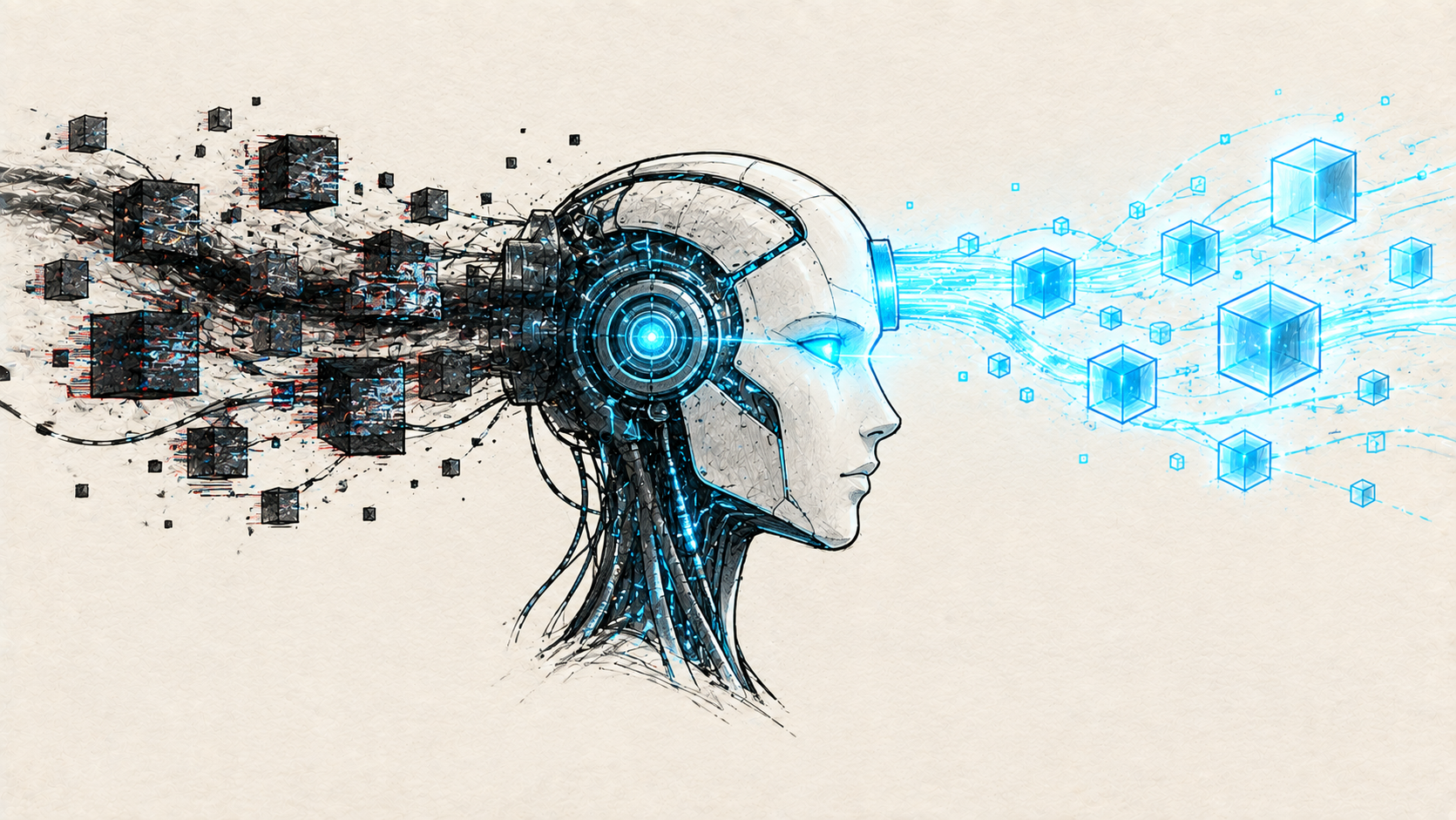
Strip away the science-fiction framing, and artificial intelligence is essentially a furnace. It consumes fuel and produces output — predictions, classifications, recommendations. The fuel is data. And the single most important fact about that fuel is an old rule of computing, older than the technology itself: garbage in, garbage out. A model trained on flawed data will produce flawed results with perfect confidence, every time.
The consequences of that rule are no longer theoretical. Consider a pattern that has now been documented repeatedly in medical AI. A diagnostic model is built to identify skin conditions from clinical photographs. It is trained on hundreds of thousands of images from a prestigious hospital system, and it performs beautifully: a headline accuracy above 90%, strong validation scores, a clean demo. The company deploys it to a clinic serving a broader, more diverse population. Within weeks, the failure appears: the system is systematically missing melanomas in patients with darker skin — particularly acral melanomas, which appear on the palms, soles, and under the nails and present differently than they do on lighter skin. A later subgroup analysis reveals the split: high sensitivity on light skin tones, barely better than a coin flip on deeper ones.
Nothing about that failure required malice, and none occurred. The developers simply fed the model data from one institution whose patient population was narrow — predominantly white and affluent — and the model learned that world perfectly. It learned the wrong reality. Conditions that present differently on darker skin were not absent from medicine; they were absent from the model's data. The algorithm was not broken. It was faithful — to a photocopy of the world rather than the world.
There is a second, quieter lesson buried in that story, and it may be the more important one. The model's 90% validation score was not a lie. The validation set was drawn from the same hospital as the training data: same machines, same photographers, same patient demographics. The model was never tested against reality — it was tested against data that looked exactly like its own training material. It scored well on a photocopy of itself. This is one of the most common and most dangerous failure modes in modern AI: a system can appear highly accurate while having learned nothing that generalizes beyond the walls of its original dataset.
Now zoom out, because the pattern is not confined to healthcare. The same dynamic repeats across the economy. A hiring model trained on a company's past hiring decisions learns to favor candidates who resemble historical hires — and quietly reproduces every bias the organization ever had. A lending model trained on historical approvals learns to exclude the communities those approvals historically excluded. A supply-chain model trained on incomplete regional signals mispredicts demand for entire markets. An educational model tuned on one country's curriculum performs poorly everywhere else. In each case, the AI does not invent reality. It reflects the reality contained in its data — gaps, blind spots, and all.
The stakes are rising because AI is becoming infrastructure. These systems increasingly help determine what people see, what gets recommended, who gets a loan, which patients receive follow-up care, which proposals receive funding. When a narrow model operates at infrastructure scale, its blind spots stop being technical defects and become distributional harms — entire groups receiving systematically worse outcomes from a system that appears, from the outside, perfectly objective.
So what does better fuel look like? The answer is not simply more data. More of the same biased data makes the furnace hotter, not smarter. Better data has four qualities: it is representative, drawn from populations that reflect the real world rather than one institution's slice of it; it is diverse, capturing the variation — in demographics, geography, and conditions — that narrow datasets systematically miss; it is transparent, with its origins, composition, and consent trail documented rather than hidden; and it is verifiable, provably unaltered from what its creators published.
The obstacle is that today's data economy cannot produce fuel with those qualities at scale. High-quality data is locked in institutional silos; acquiring it means slow licensing negotiations and six-figure fees; the people who generate it — patients, clinics, communities — are rarely compensated, so they have no reason to contribute more. The furnace is starving, and the supply chains that could feed it are gated, fragmented, and misaligned with the people holding the food.
This is the bottleneck decentralized data infrastructure is built to break, and the mechanism matters. On a network like Axons Protocol, the economics of contribution change first: clinics, hospitals, laboratories, and individuals are paid, through smart contracts, when their verified data is used — which makes diversity sustainable rather than aspirational, because contributors from underrepresented regions and populations finally have a reason to participate. Provenance changes second: every dataset carries cryptographic hashes logging its origin, its consent trail, and any revisions, so a model builder can prove where the fuel came from and that it was not tampered with — and can audit the composition of a dataset before training on it, rather than discovering the gaps after deployment. Privacy changes third: privacy-preserving techniques such as compute-to-data mean sensitive records can be queried and modeled without ever being exposed or surrendered, so a clinic can contribute to medical progress without giving up custody of its patients' files. And gatekeeping dissolves fourth: no single corporation sits between the world's data and the models built on it, so the fuel available to AI stops being the property of a few and starts reflecting everyone.
The result is not automatically unbiased AI — no mechanism erases bias by itself. What decentralization provides is the conditions under which bias can be measured, audited, and corrected: richer inputs, visible provenance, and accountability for what went into the furnace.
The future of AI may not be decided by who builds the smartest model. Models are converging; fuel is not. It will be decided by who builds the most reliable foundation beneath them — and that foundation is data the world can actually trust.