The Locked Vault: How Data Silos Are Suffocating Innovation
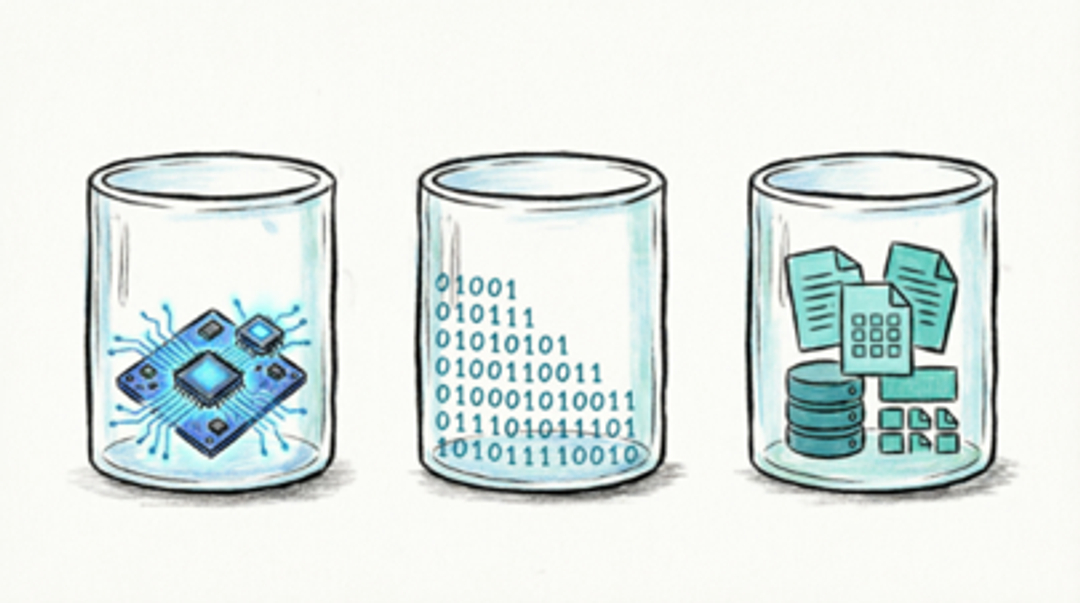
Imagine a scientist who has spent three years mapping the genomic markers of a rare neurodegenerative disease. She is close — tantalizingly close — to identifying a viable enzyme replacement therapy. But one missing piece stands between her and the finish line: a specific genetic sequence that predicts which patients will respond to treatment. She knows the sequence exists, because a pharmaceutical company on the other side of the world published a paper about it two years ago. So she submits a formal request for access to the underlying data. Months pass. The answer, when it finally arrives, is a polite, corporate no. The data stays locked in a proprietary system, guarded by legal agreements and competitive positioning — gathering digital dust in a vault.
Her only option is to spend two more years and over a million dollars regenerating data that already exists somewhere else. The therapy is delayed. Not by a lack of intelligence, not by a lack of technology, but by a lack of access.
This scenario plays out every single day, in every scientific field. It has a name: the Data Silo Problem. And understanding it is the first step to understanding why decentralized data infrastructure matters at all.
A data silo is exactly what it sounds like: a collection of information that is stored in one place, controlled by one organization, and cut off from everything around it. Hospitals have silos. Universities have silos. Corporations have enormous, well-fortified silos. Each silo holds something valuable — patient records, climate measurements, genomic sequences, experimental results — but the silos cannot talk to each other, and outsiders cannot get in.
The problem is that data does not behave like gold. Gold retains its value sitting alone in a vault forever. Data is the opposite: it becomes more valuable the more it is connected, compared, and built upon. A single hospital's records can train an AI model to detect a disease — but only for the demographics that hospital serves. Connect ten hospitals across ten countries, and the same model becomes accurate for everyone. A climate dataset means little in isolation; linked with thousands of others, it becomes the foundation for predictions that save coastlines. Data loses context when it is isolated, and with context goes most of its power.
The scale of the waste is hard to overstate. Surveys and repository audits consistently suggest that a large majority of scientific data is never shared — by some estimates, more than 80%. That means most of the expensive, carefully generated evidence humanity produces is used once, by the team that created it, and then locked away. Everyone who comes after must either reinvent the experiment or do without. We are pouring billions into generating data, and then padlocking it.
To be fair, the scientific community has tried to fix this. Public repositories exist — dbGaP in the United States, the European Genome-phenome Archive in Europe — where researchers can deposit sensitive data and request access. But these systems have structural limits. Depositing is voluntary, so the datasets with the most commercial value rarely arrive. Access committees meet on quarterly schedules, so even approved requests can take months. And the organizations holding the most valuable data have every reason not to participate at all.
That last point deserves attention, because it reveals the real root of the problem: incentives. Under the current model, what does a corporation gain from sharing data? Nothing. What does it lose? Potentially its competitive advantage. Saying no costs nothing; saying yes is pure risk. No amount of goodwill can overcome an equation that lopsided. The gate will always stay closed when the gatekeeper is punished for opening it.
So the real question is not "how do we convince companies to share?" It is "how do we change what sharing costs and earns?" And this is precisely where the infrastructure being built by Axons Protocol comes in.
On a decentralized network, a dataset's provenance, license terms, and access rules are recorded on-chain — meaning they are written to a shared, tamper-proof ledger that anyone can verify and no one can quietly alter. The data itself stays encrypted and under its owner's control. When a researcher wants to use it, something clever happens instead of a handover: the researcher's analysis travels to the data, not the other way around. This approach, known as compute-to-data, means the encrypted dataset never leaves its secure environment. The computation runs inside it, and only the result comes out — a statistical finding, a model score, an answer. The raw file is never exposed.
Every one of these computations is metered and paid. The fees split automatically through smart contracts — self-executing programs that distribute payments without intermediaries: a share to the data owner, a share to the network nodes that verified the computation, a share to the storage providers keeping the dataset alive. Every transaction is logged on the public ledger, so there is a permanent, auditable record of who used what data, for what purpose, and who was paid.
Now look at how the incentive equation has flipped. Saying yes to a researcher is no longer a favor — it is revenue. The vault stops gathering dust and starts earning on every query. Saying no now has a real cost, too, in forgone income. Sharing stops being charity and becomes strategy. And crucially, the data owner keeps control the entire time: the license terms they set are enforced by the network itself, not by trust.
This is the core idea behind everything Axons Protocol does: when the economics of access are fixed, the flow of knowledge fixes itself. The scientist at the beginning of this story would not need to beg a corporation for its vault. She would query the network, her analysis would run against the encrypted sequence she needs, she would pay a small fee that flows to everyone who made that possible, and she would have her answer in days instead of years.
The cure she was working toward was delayed not by a lack of human intellect, but by a lack of access. The infrastructure to end that kind of delay is no longer a hypothetical. It is being built — one unlocked vault at a time.